Add your promotional text...
Description
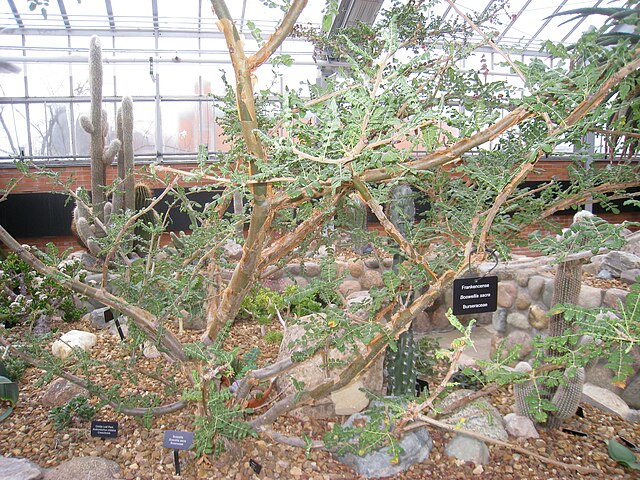
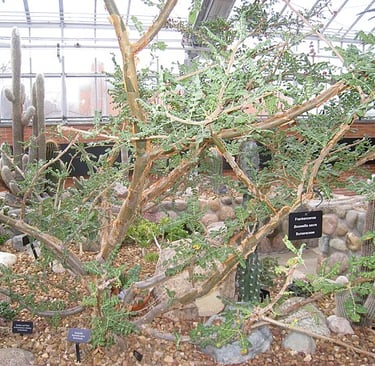
Boswellia serrata is a medium-sized deciduous tree reaching heights of 9–15 m, characterized by a light, papery bark that peels away in thin flakes, revealing a greenish or copper-colored underlayer. The branches are often crooked, exuding a fragrant resin when cut.
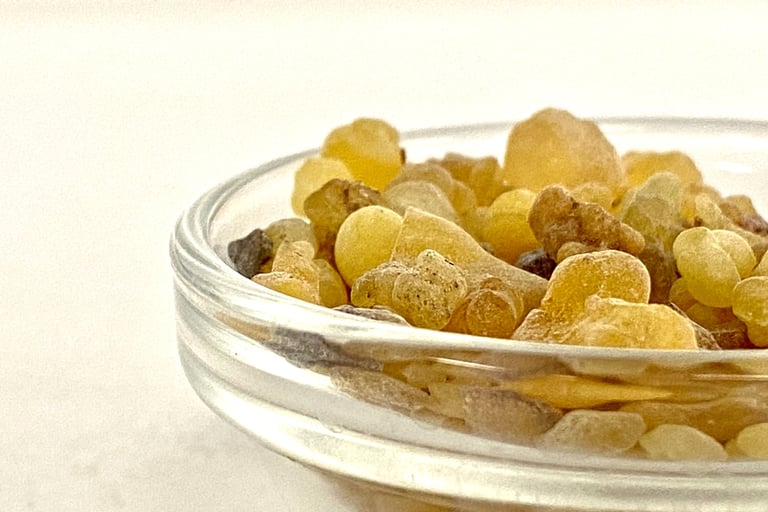
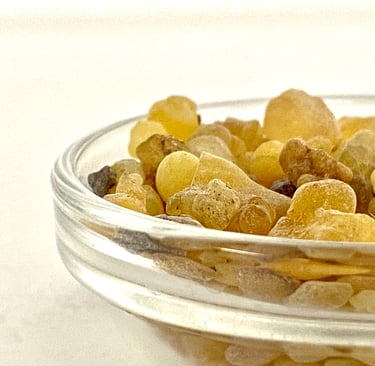
Leaves are alternate, compound, with 9–15 serrated leaflets that emit a mild aromatic scent when crushed. The small, white to pale yellow flowers occur in axillary racemes and give rise to three-lobed capsule-like fruits containing one to three seeds. The tree’s resin, known as Indian frankincense, is a milky exudate that hardens into golden-brown tears upon exposure to air.
Boswellia serrata
Phytochemistry
The primary medicinal component of Boswellia serrata is its oleo-gum resin, rich in triterpenoids and essential oils.
Key bioactive constituents include:
Boswellic acids (α-, β-, acetyl-β-boswellic acid, 11-keto-β-boswellic acid)
Olibanum resin acids
Tirucallic acids
Volatile oils (incensole, p-cymene, α-thujene)
Boswellic acids are known to inhibit 5-lipoxygenase, reducing leukotriene synthesis — the mechanism behind their anti-inflammatory and analgesic properties.
Traditional & Medicinal Uses
In Ayurvedic medicine, Boswellia serrata (Salai or Shallaki) has been used for millennia as a natural anti-inflammatory and pain-relieving resin.
Traditional uses include:
Treatment of arthritis, osteoarthritis, and joint pain
Relief of inflammatory bowel diseases
Management of respiratory issues such as asthma and bronchitis
Application in wound healing and skin inflammation
Used as incense and ritual resin in spiritual practices for its aromatic smoke
In Unani and Siddha systems, the gum resin is prescribed for strengthening the nerves and improving circulation.
Cultivation & Propagation
Propagation: By seeds or stem cuttings; resin tapped from mature trees (8–10 years old).
Climate: Prefers dry tropical and subtropical regions with annual rainfall of 500–800 mm.
Soil: Shallow, rocky, well-drained soils with neutral to slightly alkaline pH.
Harvesting: Incisions are made in the bark to collect exudate; resin hardens within 10–14 days.
Sustainable harvesting practices are critical, as over-tapping can weaken trees and reduce regeneration rates.
Pharmacological Studies
Scientific studies have validated many traditional uses of Boswellia serrata. Key findings include:
Anti-inflammatory: Boswellic acids inhibit 5-lipoxygenase, blocking leukotriene synthesis and reducing inflammation.
Analgesic & Anti-arthritic: Shown to improve joint mobility and reduce swelling in osteoarthritis.
Gastroprotective: Protects intestinal mucosa and alleviates symptoms of colitis.
Antiasthmatic: Reduces bronchial inflammation and constriction.
Antitumor: Exhibits cytotoxic and antiproliferative activity in certain cancer cell lines.
Clinical studies have demonstrated benefits in rheumatoid arthritis, ulcerative colitis, and asthma, with minimal side effects.
Cautions
Generally well-tolerated at therapeutic doses.
Mild gastrointestinal upset may occur in some individuals.
Avoid use during pregnancy unless supervised by a qualified practitioner.
Quality of resin extract varies widely; standardized preparations are preferred.
Field Identification Notes
Tree: Medium-sized, with peeling pale bark and aromatic resin exudation.
Leaves: Compound, alternate, 9–15 serrated leaflets with resinous scent.
Flowers: Small, white to pale yellow, in axillary racemes.
Fruit: Three-lobed capsule, 1–2 cm long.
Resin: Golden to amber-colored tears, strongly aromatic when burned.
References
Ammon, H. P. T. (2016). Boswellic acids and their role in chronic inflammatory diseases. Planta Medica, 82(12), 973–979.
Kimmatkar, N., et al. (2003). Efficacy and tolerability of Boswellia serrata extract in treatment of osteoarthritis of the knee: a randomized double-blind placebo-controlled trial. Phytomedicine, 10(1), 3–7.
Chevrier, M. R., et al. (2005). Boswellia carterii extract inhibits pro-inflammatory cytokines in human monocytes. Clinical and Diagnostic Laboratory Immunology, 12(5), 575–580.
Safayhi, H., & Ammon, H. P. (1997). Boswellia serrata: An overall assessment of its anti-inflammatory potential. Phytomedicine, 4(3), 287–300.
Tropical Plants Database (2024). Boswellia serrata Roxb. tropical.theferns.info
WebMD (2024). Boswellia overview. webmd.com